
Equipment note
Runners Toe: Why It Happens and What to Do About It

September 7, 2026
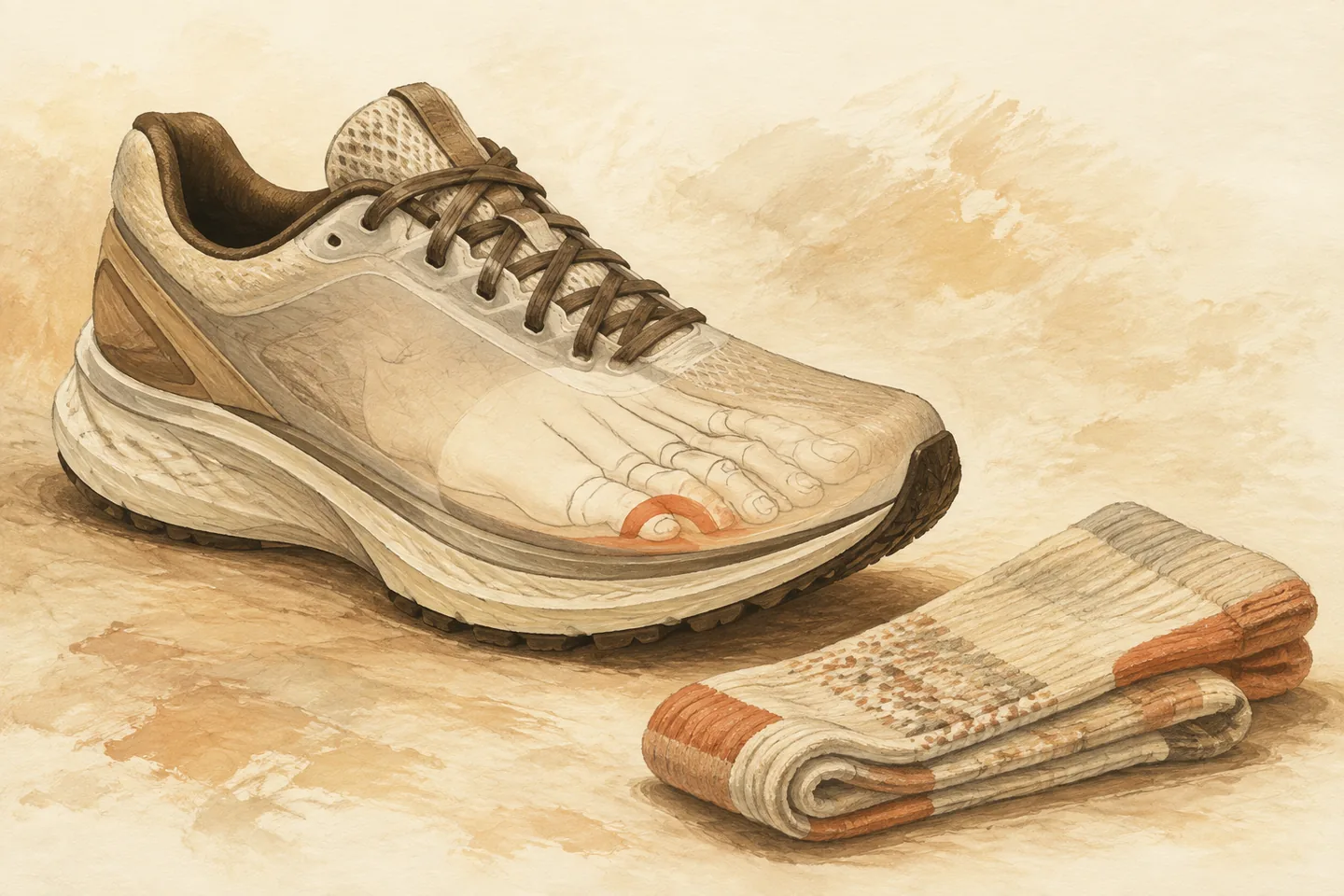
Runners toe usually means bleeding beneath a toenail after repeated pressure or impact. The nail may turn red, purple, brown or black, feel tender inside a shoe, or loosen after weeks of training. The medical term for blood collecting beneath the nail is a subungual haematoma.
A demanding run can trigger it, but repeated rubbing over several outings can also damage the nail bed. Not every dark nail is a running injury: unexplained discolouration, changing streaks and persistent pain need assessment rather than an assumption about footwear.
Why running damages the nail
The nail rests on a sensitive bed containing small blood vessels. Repeated contact with the front or top of a shoe can injure those vessels, allowing blood to collect beneath the nail. Pressure from that trapped blood may cause throbbing.
On descents, the foot can slide forwards and push the toes against the shoe. A narrow or shallow toe box may compress them even when the shoe is long enough. A loose heel or midfoot can allow repeated sliding. These mechanisms and associated nail changes are described in clinical guidance on skin diseases in long-distance runners.
Think about what changed before the soreness began: a hillier route, longer outing, different socks, insoles or shoes. The aim is to identify where contact occurs. Simply buying a larger size may create more sliding if the rest of the shoe no longer holds the foot securely.
Recognising the signs
A bruise may appear soon after running or become clearer the next day. It can cover a small patch or much of the nail. Tenderness when the shoe presses on it, a tight sensation and partial lifting of the nail can accompany the colour change.
As the nail grows, a traumatic dark patch may move towards the tip. This can support an explanation of injury, but it cannot confirm the diagnosis. Fungal infection, an ingrown nail and other conditions can also alter a nail's colour or shape.
A new or changing dark streak, particularly without a clear injury, needs examination. Pigment extending onto the surrounding skin also warrants attention. Melanoma can develop beneath a nail, although it is uncommon; nail melanoma guidance explains the warning signs. Do not wait for an unexplained mark to grow out before seeking advice.
Check fit where the pressure occurs
Assess length, width and depth together. The longest toe needs room without repeatedly meeting the end, and the upper should not press down across the nails. At the same time, the heel and midfoot should stay secure enough to limit forward movement.
Try shoes with the socks and insoles you actually run in. Walk, bend and, where possible, jog briefly. Notice whether your heel lifts, your toes touch the front or your nails press against the upper. Check both feet rather than judging fit from one. Pay attention to the second toe if it is your longest.
Lacing adjustments may reduce sliding, but tightening should not cause numbness or squeeze the forefoot. If securing the heel leaves the toes cramped, reconsider the shoe's shape. A different fit may help more than repeatedly adjusting a shoe that lacks space where you need it.
Use an easy outing to assess changes before returning to a long or steep route. Comfortable standing fit does not show how a shoe behaves during repeated downhill steps. Stop and reassess if the same nail pressure returns.
Reduce avoidable rubbing
- Trim nails straight across, keeping them short enough not to catch without cutting into the corners or tender skin.
- Wear socks that lie smoothly around the toes. Check for bunching, bulky seams and fabric that slides inside the shoe.
- Change wet or uncomfortable socks when practical, and check whether damp fabric is contributing to rubbing.
- Inspect your toes after hills, long runs or footwear changes. Early tenderness can reveal a pressure point before substantial bruising develops.
Avoid digging beneath the nail with sharp tools. If a thickened or distorted nail is difficult to trim safely, seek help rather than forcing clippers through it. Nail care cannot compensate for persistent impact inside the shoe.
Care for a bruised nail
Remove the source of pressure and pause activities that reproduce pain. For mild soreness with intact skin, roomy footwear and a cool, damp cloth may offer comfort. Keep the foot clean and dry. If the nail catches on socks, protect it with a light, non-stick dressing without wrapping the toe tightly.
Do not pull off a nail that remains attached. A completely detached edge that snags may be carefully trimmed with clean clippers, but leave attached portions alone. Pulling can tear the nail bed and create a wound. Seek help if you cannot tell which part is safely loose.
Never drill, burn or puncture the nail at home. A clinician may consider drainage for a painful collection of blood after assessing the injury. Severe pain, a black or purple nail, difficulty bending the toe or blood beneath much of the nail warrant medical care, as outlined in the American Academy of Dermatology’s advice on injured nails.
The nail may loosen or shed as the injury settles. Its appearance can remain abnormal after pain improves because toenails grow slowly. The NHS guidance on nail problems explains that an injured toenail can take a long time to grow back. Avoid repeatedly testing a loose nail by lifting it.
When to get medical advice
Seek prompt assessment for severe or worsening pain, difficulty walking, marked swelling, a misshapen toe or persistent numbness. Nail bruising can occur alongside a fracture or soft-tissue injury; the dark patch alone cannot show how extensive the damage is.
Increasing redness, warmth, swelling, discharge or worsening tenderness around the nail may indicate infection. Broken skin that is not healing also needs attention. A nail that changes shape, changes colour or falls off without a known cause should be examined.
If you have diabetes, reduced sensation, poor circulation or a condition affecting healing, seek advice early about a foot injury, especially with broken skin. Reduced pain does not necessarily mean little damage when sensation is impaired. Avoid cutting damaged tissue or attempting drainage yourself.
Toe pain has several possible causes. MedlinePlus’ overview of toe injuries and disorders covers injuries and conditions affecting the toes. During an assessment, explain when symptoms started, any direct impact, recent training changes and whether the pain occurs barefoot as well as in shoes.
Return to running according to symptoms
Once ordinary walking is comfortable, any broken skin has closed and footwear no longer presses painfully on the nail, consider a short, easy run on a relatively flat route. Follow any individual advice given after assessment, particularly if another injury was found.
Check the toe afterwards and later that day. Stop if pain returns or changes your stride. Reduce the activity and reassess the pressure point rather than using the nail's colour alone to decide whether you can continue.
Reintroduce distance, pace and hills separately so you can identify what brings symptoms back. There is no single recovery timetable: skin healing, nail stability, pain and associated injuries all matter. Repeated bruising despite fit adjustments is a reason to seek assessment before extending training.