
Equipment note
Best Trail Running Shoes

August 14, 2026
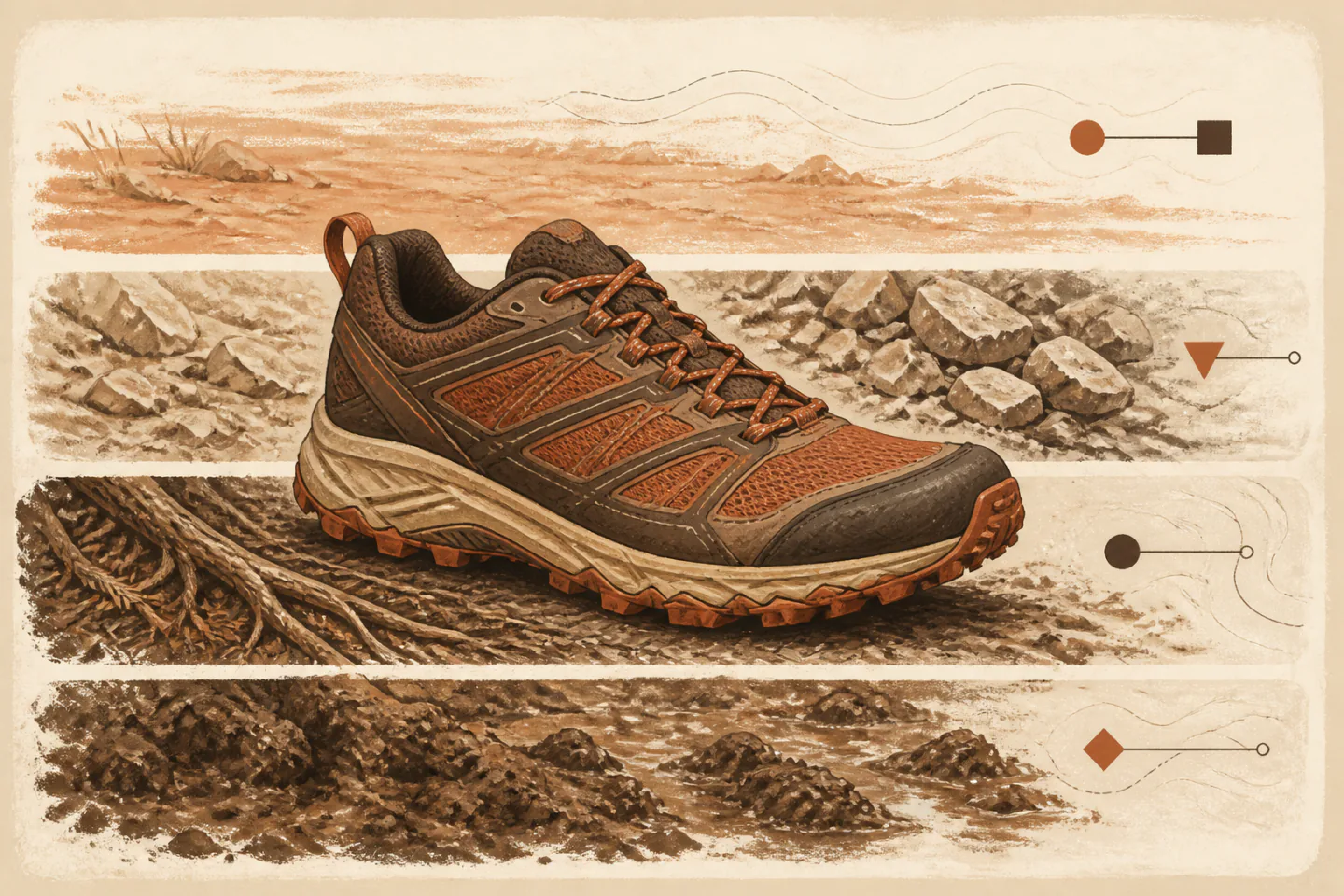
The best trail running shoes are not a single type. The right pair depends on the ground you cover, the distance you run and the shape of your feet. A light shoe with shallow tread can feel natural on dry, compact paths but insecure in mud. A heavily protected shoe may suit broken rock yet feel cumbersome on easy tracks.
Choose by narrowing the task first: identify your usual terrain, decide how much cushioning and protection you need, then assess fit. Colour, weight and fashionable details matter less than secure footing and comfort that lasts for the whole run.
Start with your usual terrain
Look at the surfaces that make up most of your route rather than the hardest feature you might occasionally encounter. Outsole rubber and tread shape affect grip, comfort and wear, so a shoe designed for one surface can be awkward on another.
- Dry hardpack and gravel: Low or moderate lugs give steady contact with firm ground. A flexible sole and some exposed cushioning can make these shoes comfortable where trails include stretches of pavement.
- Mud and soft soil: Deep, widely spaced lugs can bite into loose ground and release mud more readily. They tend to feel less smooth on roads and may wear quickly on abrasive surfaces.
- Rock and roots: Prioritise dependable rubber, a stable base and protection beneath the forefoot. Excessively tall lugs can feel vague on flat stone, while a very stiff sole may reduce sensitivity.
- Mixed routes: Moderate tread is the practical compromise when a run combines pavement, park paths and uncomplicated trail. It will not equal a specialised mud shoe in deep ground, but it should behave predictably across changing surfaces.
Comparative tested trail-running shoe recommendations for mixed terrain can help you identify useful categories. Treat any ranking as a shortlist, not a substitute for checking the tread against your local routes.
Make fit the deciding factor
A trail shoe must hold the heel and midfoot securely without squeezing the forefoot. Uneven ground places more sideways force on the upper than level pavement, while descents push the foot towards the front. A loose shoe can slide during turns; a tight one can cause pressure, numbness or damaged toenails.
Check length, width and heel hold
Start with enough space in front of the longest toe for the foot to move on descents. Check width separately: extra length does not solve a cramped forefoot, and a wide toe box does not compensate for a heel that lifts. The toes should spread without touching the front, while the heel remains seated when you walk uphill.
Foot shape varies, and sizing labels are inconsistent between models. Try both shoes because feet are rarely identical. If one foot is slightly larger, fit that foot first. Do not expect a painful pressure point to disappear through use; cushioning may settle, but the basic shape of the shoe will not change enough to correct a poor match.
Test with your normal kit
Wear the socks, insoles or orthotics you use for running. Each changes the available volume and the way the upper holds your foot. Try shoes later in the day if your feet tend to swell, and use an incline or stairs where possible. Walk down firmly, make controlled side steps and jog briefly. Your toes should not strike the front, and your heel should not rub.
A trail-running shoe buying guide can clarify how fit, cushioning and terrain interact. Even so, immediate comfort is a stronger signal than a feature list. If lacing must be painfully tight to prevent movement, choose a different shape.
Compare the parts that change the ride
Once you have a suitable fit and tread pattern, compare cushioning, protection, stability and upper construction. These features involve trade-offs rather than a simple scale from basic to better.
Grip and outsole
Lug depth is only one part of traction. Spacing affects how readily the outsole clears mud, while the rubber compound affects grip and wear. Softer rubber often feels reassuring on smooth rock but can abrade faster. Firmer rubber usually tolerates hard ground better but may feel less secure on wet stone.
Inspect the full outsole. Continuous rubber adds durability but can add weight and stiffness. Areas of exposed foam may make a shoe lighter and smoother on firm trails, although those areas can suffer on sharp rock. Use lab-tested trail running shoe rankings to compare construction, then judge whether the tested surfaces resemble your own.
Cushioning and ground feel
More cushioning can soften long stretches of hard ground and repeated descents, but a tall or narrow platform may feel unstable on rough cambers. Less cushioning gives clearer feedback about roots and stones, although some runners find it tiring over longer distances. Neither approach is inherently safer or more capable.
Consider the whole platform rather than foam thickness alone. A broad base can feel composed even with substantial cushioning. A flexible, low shoe can feel agile but may demand careful foot placement. Choose the level that lets you move confidently at your normal pace.
Protection and upper construction
A rock plate or firm protective layer spreads pressure from sharp stones. This is useful on broken ground, though it may reduce flexibility. Toe bumpers protect against minor knocks, while reinforced side panels can resist abrasion and help the upper hold its shape.
For wet routes, distinguish waterproofing from drainage. A membrane can keep out shallow splashes and damp vegetation, but water entering over the collar may remain inside. A breathable upper lets water in more readily but can drain and dry faster. Base the choice on the conditions you actually face, including temperature and the depth of crossings.
Match the shoe to distance and purpose
An everyday trail shoe should be comfortable enough for routine training and durable enough for repeated use. Moderate cushioning and tread usually suit varied routes. If most runs begin at the front door and include substantial pavement, choose a smoother outsole rather than accepting harsh road manners for traction you rarely need.
Long outings place greater importance on lasting fit. Leave room for swelling, look for protection that does not create stiffness and favour a stable platform when fatigue may make foot placement less precise. Carrying extra shoe weight may be worthwhile if it provides the grip and protection the route requires, but unnecessary structure can become tiring.
For faster efforts, low weight and responsive cushioning may appeal, yet fit and control still come first. A narrow upper or minimal outsole is only useful when it remains secure on the intended course. Avoid making major changes to cushioning, sole height or heel-to-toe shape immediately before an important run.
Use a practical fitting process
- List the surfaces on your regular routes and choose the tread category that covers most of them.
- Try several shapes in the correct category rather than choosing by appearance or a general ranking.
- Check toe clearance, forefoot width and heel hold while standing, walking on an incline and moving sideways.
- Compare cushioning and protection only among pairs that already fit without pressure or slipping.
- Test the chosen pair on a short, familiar route before using it for a long or remote outing.
During the first few runs, stop if you notice persistent tingling, numbness, rubbing or toe impact. A different lacing pattern can relieve mild pressure or improve heel hold, but it cannot correct a shoe that is fundamentally too narrow, too short or the wrong shape.
Care, wear and replacement
After muddy runs, remove loose dirt with a soft brush and clean the outsole with cool or lukewarm water. Take out the insoles, loosen the laces and let the shoes dry indoors away from direct heat. Strong heat can distort bonded materials, while leaving wet dirt packed around the upper makes inspection difficult.
There is no universal replacement distance. Terrain, running style, construction and care all affect wear. Inspect the shoes rather than relying on mileage alone:
- Replace or relegate them when worn or missing lugs no longer give dependable grip on familiar ground.
- Assess the midsole when it feels markedly flatter, firmer or less stable than it did on the same routes.
- Check the upper for tears that allow the foot to move, not merely cosmetic scuffs or surface dirt.
- Investigate new discomfort rather than assuming it is normal ageing in either the shoe or the runner.