
Equipment note
Best Trail Running Shoes for Men

August 14, 2026
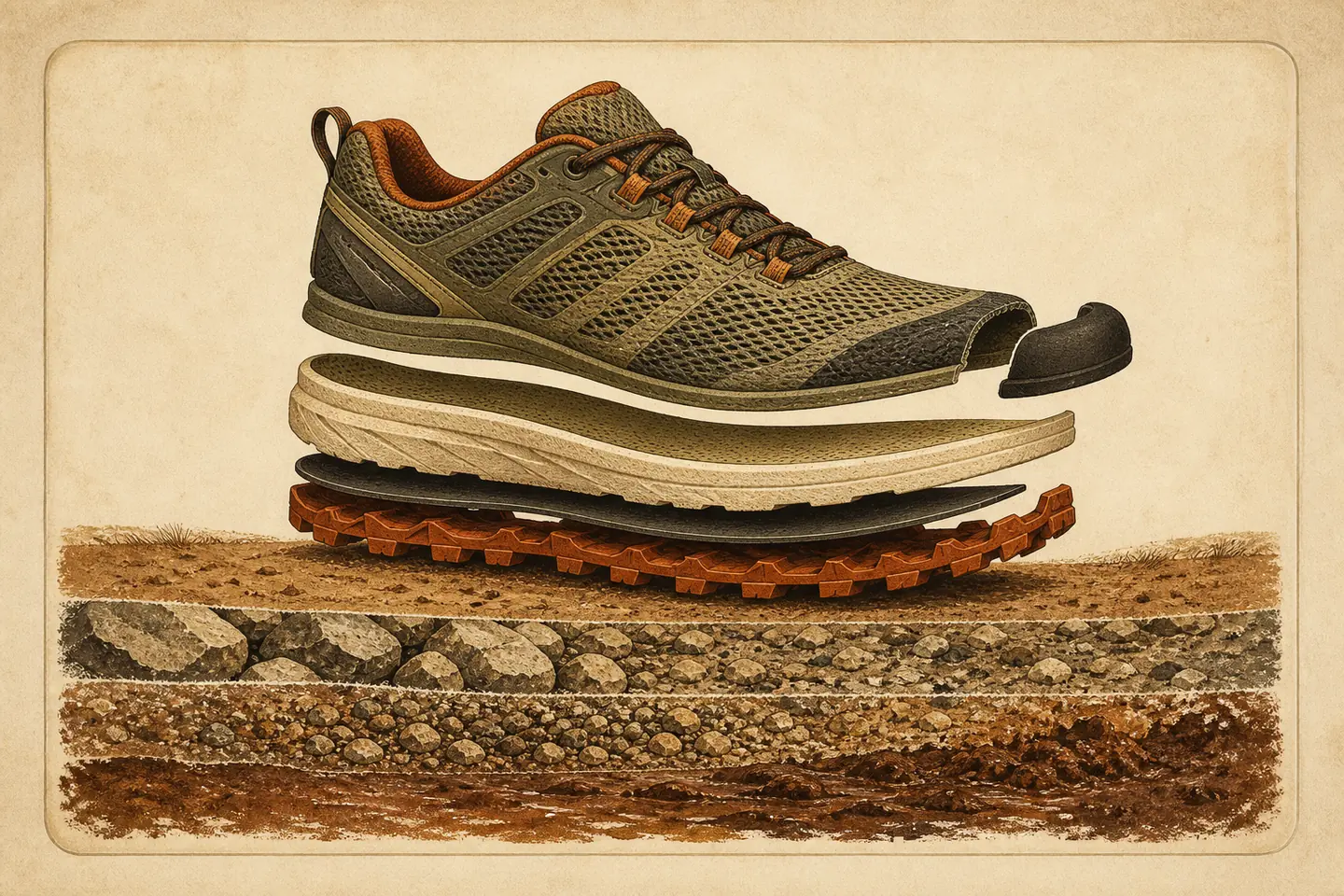
The best trail running shoes for men are the ones that fit securely and suit the ground underfoot. A shoe built for deep mud can feel awkward on hard paths, while a light road-to-trail shoe may offer too little grip or protection on wet rock.
Choose for the routes you run most often, not the hardest trail you might attempt once a year. Terrain, distance, foot shape and weather should guide the decision. Brand reputation and appearance are secondary to fit, traction and control.
Start With Your Usual Terrain
Look at a typical week of running. Note how much time you spend on compact dirt, loose gravel, mud, rock, grass and paved connections. This gives you a practical basis for judging tread and protection.
- Firm paths and dry gravel: choose moderate, closely spaced lugs and a flexible sole that moves smoothly on hard ground.
- Mud, wet grass and loose soil: deeper, widely spaced lugs can bite into soft ground and release debris more readily.
- Rocky or root-filled trails: prioritise a stable platform, secure upper, protected toe and enough underfoot shielding for sharp edges.
- Road-to-trail routes: look for lower-profile tread that will not feel harsh during paved sections.
Independent trail running shoe testing can help compare how different constructions behave across varied surfaces. Use those comparisons to narrow the field, then judge the remaining options against your local ground.
Get the Fit Right
Length and Toe Room
Try shoes with the socks you use for running and, if possible, later in the day when feet may be slightly larger. Leave about a thumb's width between the longest toe and the front. Toes should spread without pressing against the sides.
Downhill running pushes the foot forwards. If the shoe is too short, toes can strike the front; if it is too large, the foot may slide and create friction. A wider forefoot often needs a genuinely wider shape rather than extra length.
Heel and Midfoot Hold
The heel should remain seated when walking uphill or climbing stairs. A small amount of collar movement is less important than obvious lifting, rubbing or pressure on the Achilles tendon. The midfoot should feel held without numbness or pinching.
Test lateral security by leaning gently from side to side or standing on an angled surface. The foot should not spill over the edge of the platform or slide inside the upper. Different lacing patterns can refine a sound fit, but they cannot correct a shoe that is fundamentally the wrong shape.
Balance Grip, Protection and Stability
Outsole and Lugs
Lug depth is only part of traction. Spacing affects how well mud clears, while the shape and direction of the lugs influence braking and climbing. Closely packed tread places more rubber on firm surfaces; open tread is usually better in soft ground.
Softer rubber may grip smooth wet surfaces well but can wear more quickly on pavement and abrasive rock. Firmer rubber often lasts longer but may feel less secure on slick roots. No outsole grips every surface equally, so match the compromise to the conditions you meet most.
Underfoot Protection
A rock plate or dense protective layer spreads pressure from sharp stones and roots. It is useful on rough trails, particularly when fatigue makes careful foot placement harder. On smooth tracks, the same protection can add stiffness without providing much benefit.
Protection can also come from midsole density, raised sidewalls and a reinforced toe. Press the forefoot and twist the shoe gently: enough resistance can shield the foot, but excessive rigidity may reduce comfort and ground feedback.
Platform Stability
A broad base, firm sidewalls and secure upper can make a cushioned shoe feel controlled. A narrow or very soft platform may feel less predictable on off-camber ground. Stack height alone does not determine stability; the whole shape and construction matter.
Choose Cushioning, Drop and Weight Deliberately
Cushioning and Stack Height
Lower-stack shoes keep the foot closer to the trail and make changes in surface easier to feel. They can suit short, technical routes or runners who value precise placement. They also leave less material between the foot and repeated impacts.
Moderate cushioning is a versatile choice for regular training. Higher stacks can soften long outings on hard or rocky ground, but very soft foam may feel vague during steep descents. Test cushioning on an incline or uneven surface rather than judging it only on a flat floor.
Heel-to-Toe Drop
Drop is the difference in height between the heel and forefoot, not the total thickness of the sole. A lower drop creates a more level stance and may place greater demand on the calves and Achilles tendon. A higher drop raises the heel and may feel more familiar to runners coming from conventional road shoes.
Avoid making a large change simply because a specification sounds desirable. Introduce an unfamiliar drop on short, easy routes and allow time to assess how your lower legs respond before increasing distance or difficulty.
Weight Versus Protection
Light shoes can feel agile on dry, runnable trails. Protective shoes add material through toe guards, denser midsoles, stronger uppers and deeper tread. That extra structure may be worthwhile on scree, sharp rock and long descents. Compare weight only after the shoe meets your fit and terrain needs.
Match the Upper to the Weather
Breathability and Drainage
Open mesh releases heat and usually drains faster after stream crossings. This makes it useful in warm weather and on routes where water can enter over the collar. Check that the mesh bends without forming a hard crease across the toes.
Water-resistant materials can help in cold rain, shallow puddles and wet grass. They do not stop water entering from above, and once soaked they may dry more slowly than open mesh. For repeated crossings, drainage can be more useful than trying to keep every drop out.
Abrasion Resistance
Rock, scrub and grit can wear through delicate uppers. Look for reinforcement around the toe, outer forefoot and lace points, where scraping and tension are concentrated. Those panels should protect without creating stiff internal seams.
A gusseted tongue helps exclude small stones and prevents the tongue from drifting. Inspect how the upper joins the sole: lifting edges, uneven bonding or loose stitching are warning signs before the shoe reaches a trail.
Match the Shoe to Distance and Use
Short Technical Runs
For steep, twisting routes, secure footing usually matters more than maximum cushioning. Favour a locked heel, close midfoot hold, stable base and tread suited to the surface. Published lab-tested technical trail shoe comparisons can clarify which construction details to examine, but only an individual fit test can show whether the shoe holds your foot properly.
Long Mountain Outings
Long runs increase the importance of toe room, lasting comfort and protection. Feet may swell, while tired legs make stability more valuable. A broad platform and moderate-to-high cushioning can help, provided the shoe remains controlled on descents.
For longer outings, Long-distance trail shoe testing can help identify the trade-offs reviewers examine, such as comfort, protection and grip over sustained use. Read the test conditions closely; a shoe assessed on dry mountain ground may not answer questions about deep mud.
Everyday Mixed Terrain
For training that combines dirt, gravel and short paved stretches, choose moderate tread, flexible forefoot movement and balanced cushioning. Aggressive mud lugs can feel intrusive on pavement, while a smooth outsole may lack control on loose corners. Durability matters when one pair handles most weekly runs.
Test Before Committing to Longer Runs
- Wear both shoes indoors with running socks and check length, width and pressure points.
- Walk up and down stairs to assess heel lift and toe contact.
- Run a short, familiar route before using the shoes on remote or technical ground.
- Recheck lacing after the upper settles, keeping the midfoot secure without restricting circulation.
- Increase distance gradually if the drop, cushioning or stiffness differs from your previous footwear.
Do not rely on a promised break-in period to solve sharp pressure, numbness or obvious sliding. Materials may soften slightly, but the basic shape and size will remain.
Care and Replacement
After muddy runs, remove loose debris with a brush and take out the insoles. Air-dry the shoes away from direct heat, which can damage foam, fabric and adhesives. Avoid storing them wet or packed tightly in a bag.
Inspect the outsole for rounded or torn lugs, especially under the areas used for braking and push-off. Check the upper at flex points, around the toe guard and beside the sole. Loose overlays, damaged lace points or torn mesh can weaken foot hold even when the tread still looks usable.
Replace a pair when lost grip, uneven compression, damaged structure or a persistent change in comfort affects how it performs. Visible dirt and cosmetic creasing are not enough on their own; judge the shoe by whether it still fits securely and behaves predictably on its intended terrain.